






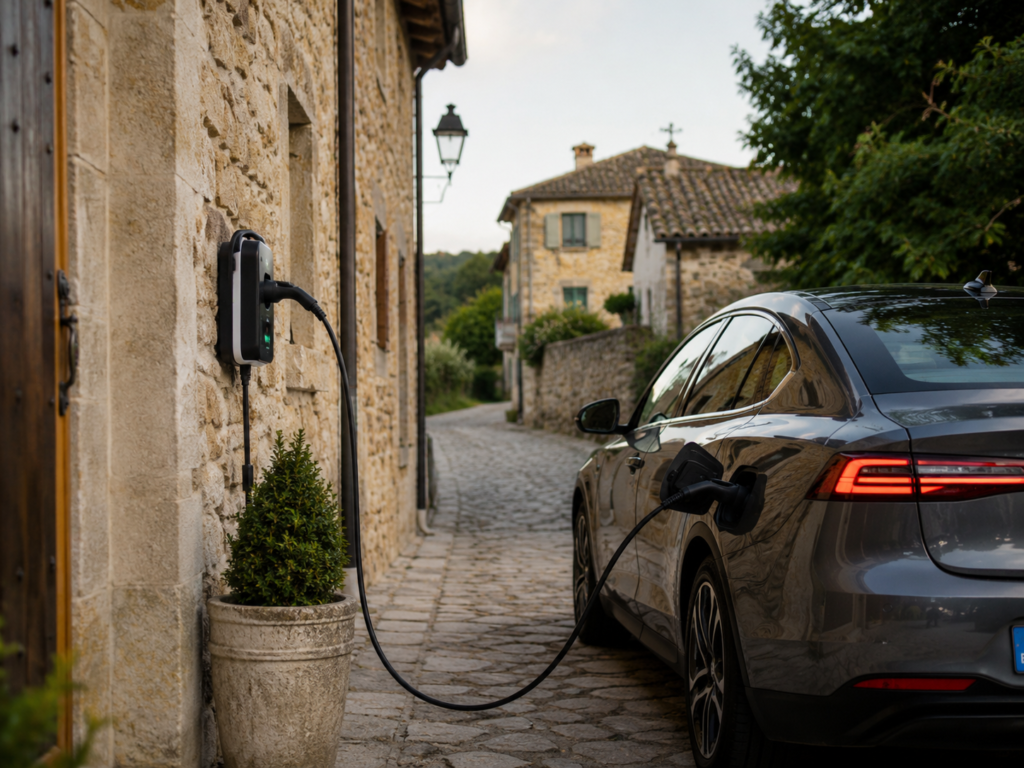
The Ultimate Beginner’s Guide to EV Car Charging: Everything You Need to Know
Switching to an electric vehicle (EV) is one of the most exciting choices you can make. It’s cleaner, quieter, and significantly cheaper to run than a traditional petrol or diesel car. However, for first-time owners, the world of EV car charging can initially feel a bit like learning a new language.
What is the difference between AC and DC power? How long does a charge actually take? In this straightforward guide, we break down the essentials of EV charging so you can plug in with total confidence.
1. The Three Main Places to Charge Your EV
One of the best perks of owning an electric vehicle is that you don’t have to visit a dedicated fuel station just to top up. You can charge your car while you sleep, work, or shop.
- Charging at Home: For most drivers, this is the most convenient and cost-effective option. Installing a dedicated home EV charger allows you to wake up to a “full tank” every single day.
- Charging at Work: Many modern employers now offer subsidized or completely free EV charging points in their staff parking lots as a workplace perk.
- Public Charging Networks: Found at supermarkets, motorway service stations, hotels, and public car parks, public chargers keep you powered up during long-distance road trips.
2. Understanding Charging Speeds (Slow, Fast, and Rapid)
Not all chargers are built the same. Charging speeds are measured in kilowatts (kW). Essentially, the higher the kW rating, the faster your car’s battery will fill up.
| Charger Type | Power Output | Best Used For |
| Slow | 3kW – 6kW | Overnight charging at home or long-term parking. |
| Fast | 7kW – 22kW | Dedicated home wallboxes or destination charging (e.g., supermarkets). |
| Rapid & Ultra-Rapid | 50kW – 150kW+ | Motorway service stations for quick top-ups on long journeys. |
Pro Tip: When using a rapid or ultra-rapid public charger, it is highly recommended to stop charging once your battery hits 80%. Because of the vehicle’s safety software, the final 20% takes much longer to charge to protect the battery’s overall health.
3. AC vs. DC Charging: What’s the Difference?
You will frequently see the terms AC (Alternating Current) and DC (Direct Current) mentioned in the EV world.
The electricity that comes from the national grid is always AC. However, a car’s battery can only store power as DC.
- When you use an AC charger (like a standard home wallbox), your car uses its own onboard converter to change that power into DC. This takes a little time, which is why AC charging is slower.
- When you use a DC charger (the big public rapid chargers), the massive charging unit converts the electricity to DC before it enters your car. This allows the energy to flow straight into the battery at lightning speed, frequently adding 100 miles of range in as little as 15 to 30 minutes.
4. How to Find EV Charging Stations on the Go
Range anxiety is quickly becoming a thing of the past. Modern EV infrastructure makes finding a plug incredibly easy. Alongside standard navigation tools like Google Maps and Apple Maps, dedicated tracking apps like Zap-Map allow you to filter available public chargers by speed, cost, and plug compatibility before you even arrive.
Ready to make the switch to electric driving seamless? Browse our site for more expert tips, or get in touch today to find